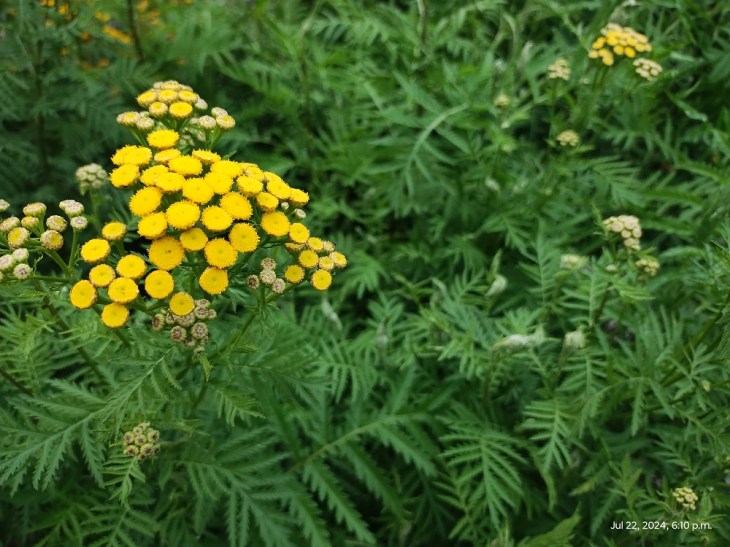
Medicinal and culinary use of tansy goes back as far as history does. The flowers also give a strong yellow dye. The first president of Harvard’s coffin was packed with tansy, a common embalming aid in colonial New England. After its introduction by Europeans, wreaths of tansy leaves and flowers were worn by Native Americans to ward off various diseases and parasites. Settlers preferred to put it in their shoes, for the same reason.
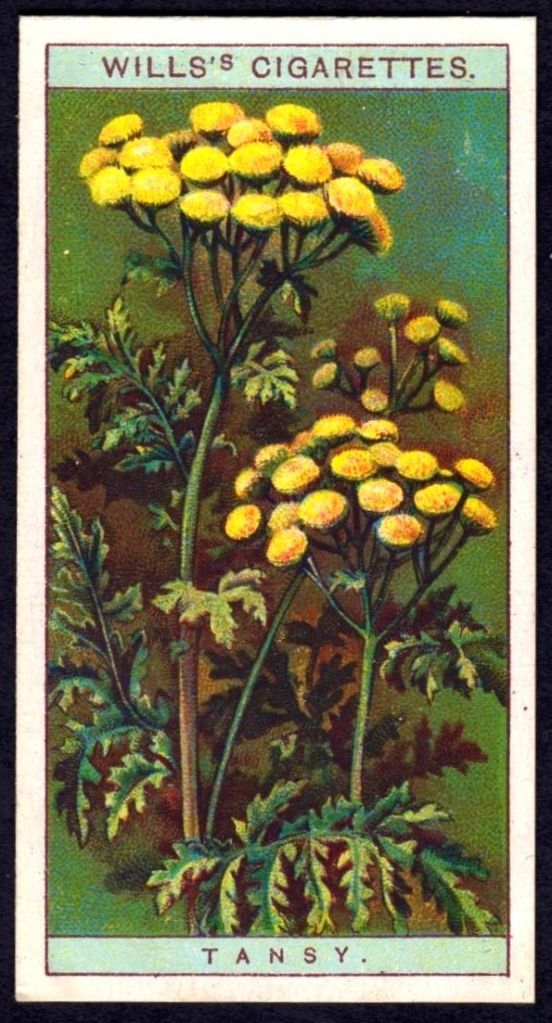
In County Cork, drisheen – black gelatinous pudding made from blood, milk, salt and fat, is accompanied by a bechamel sauce made with tansy. James Joyce, whose father was from Cork, first mentions it in 1916’s Portrait of the Artist as a Young Man. In Finnegan’s Wake he writes, “Correspondents…will keep on asking me what is the correct garnish to serve drisheens with. Tansy Sauce. Enough.” Chaucer’s 14th century Canturbury Tales describes tansy as a symbol of bitterness and sorrow, reflecting the complexities of human emotions. More recently, in her 2000 novel Prodigal Summer, Barbara Kingsolver uses tansy as a representation of resilience and the enduring cycle of nature.
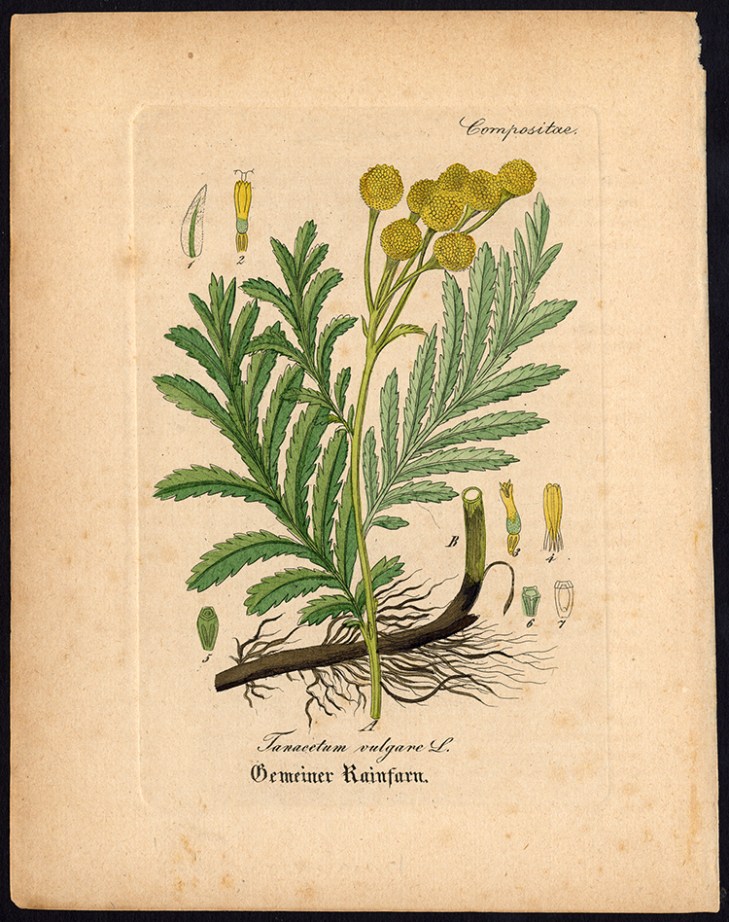
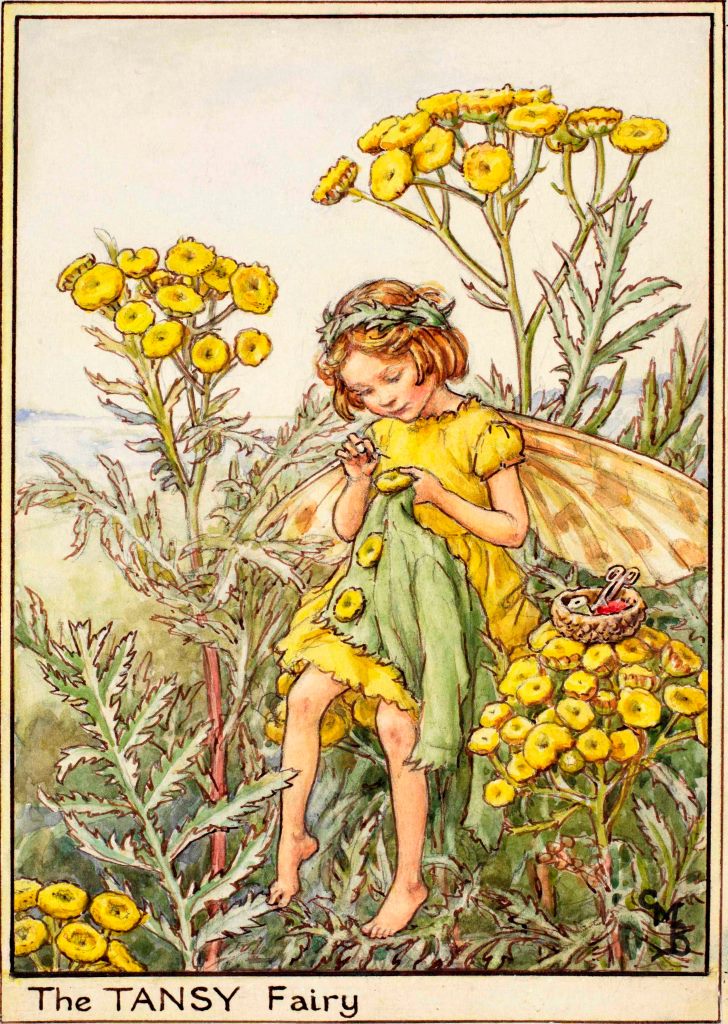
In the handpainted 1913 book The Language of Flowers, tansy means: “I declare war against you”. Tennessee whiskey baron Jack Daniel liked his drink with a little sugar and crushed tansy leaf. Lest ye want to imitate the great Mr. Jack, please beware for one leaf too many brings toxic consequences.
 tbh
tbh 